 Iraya
Who is Olentzero: how to explain him to your little one, and a story to read to them
Olentzero is the charcoal burner who comes down from the mountain on the night of 24 December with presents for the children of the Basque Country and Navarre. First, a story to read to them; then, where his legend comes from and what to say when they ask.
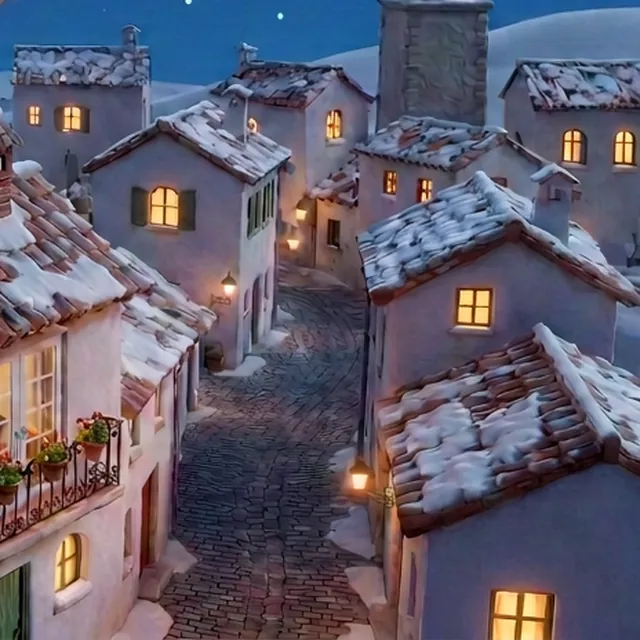
Free preview in about 2 minutes · €39.99 hardback
“The Letter”: a story that speaks to your little one, for the night of the 24th
On the afternoon of the 24th, at the end of your street, music starts to play.
“They're coming!”
First you see the txapela, his Basque beret. Then the round tummy. It's Olentzero, and he's throwing sweets! Beside him walks Mari Domingi, with a basket in her hand.
You've got your letter folded up in your pocket. Your knees are a little wobbly, but you go up to her and give it to Mari Domingi.
“Will you give it to him?”
“Of course,” she says, with a wink. “We work together.”
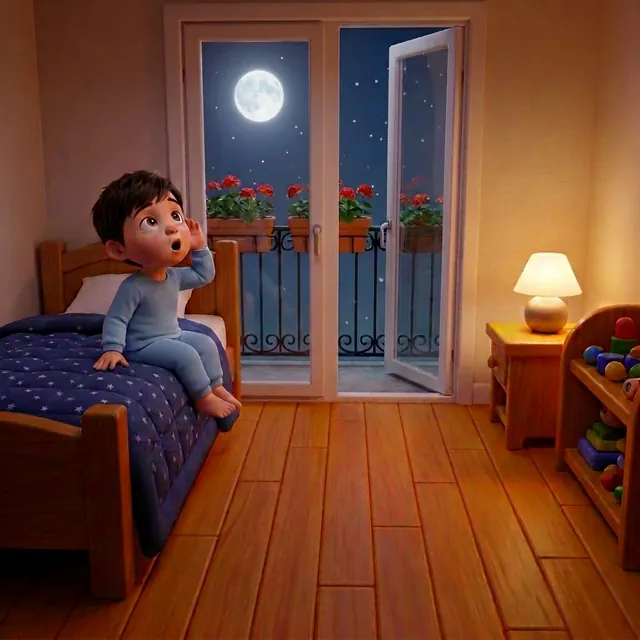
That night you eat your dinner without a fuss and put your pyjamas on without anyone telling you. But in bed, your eyes just won't close.
“What if he doesn't know where I live?” you ask in a tiny voice.
“Mari Domingi has your letter,” says whoever is tucking you in. “And she knows all the shortcuts.”
You snuggle down. Far, far away, someone is singing: “Olentzero joan zaigu…”. The song gets smaller, and smaller, and smaller… and you fall asleep.
In the morning, by the door, there's a parcel with your name on it. In one corner of the paper there's a little grey smudge, like ash.
You touch it with one finger and laugh.
“Eskerrik asko, Olentzero.”
What lies behind it: a charcoal burner, a log and a friend
Before he brought toys, Olentzero was the log that burned in the hearth on Christmas Eve; the next day its ashes were scattered in front of the door (hence the little smudge in the story). Later he was a straw figure that young people carried from house to house, asking for gifts. The kindly charcoal burner who brings presents is more recent: Zarautz revived the custom in the mid-20th century and, from the seventies onwards, the ikastolas (Basque-medium schools) took him all over the Basque Country.
Mari Domingi was born in San Sebastián in the nineties (1994 is the year usually given), named after a popular carol, so that the night would have a heroine too. Vitoria-Gasteiz added her to its parade in 2014.
What to say to them, word for word, when they ask about Olentzero
Answers you can give just as they are; anything in brackets is only for you.
- “Is Mari Domingi his girlfriend?” No: they're friends and neighbours, and on that night they work together. (Some places present her as his partner; Vitoria-Gasteiz City Council says she is neither his wife nor his helper.)
- “Why is he so dirty?” Because he's a charcoal burner and spends all day among smoke and ash. If he brings charcoal, it's to keep the house warm.
- “Why is there an Olentzero on every street?” Because he can't be everywhere at once, so friends of his dressed just like him help out; your letter still reaches him.
- “What about Father Christmas? And the Three Kings?” Every home has its own visitors: in many, Olentzero comes on the night of the 24th and the Three Kings on the night of the 5th; in others, Father Christmas comes that same night too. None of them is more real than the others.
- “What if I've been naughty?” Olentzero comes anyway: he doesn't come to check on that, he comes to bring presents. (Best not to use him as a threat.)
Letter in hand, kalejira and carol singers: Christmas Eve out in the street
Many children hand their letter over in person at the parade, to Olentzero or to Mari Domingi. The kalejira, the street parade with music, sets off on the afternoon of the 24th or a day or so earlier, depending on the town (in Bilbao, on the 23rd).
His popular song begins “Olentzero joan zaigu mendira lanera” (“Olentzero has gone up the mountain to work”): teach your little one that line and they'll sing it along with everyone else.
At dusk, groups of singers go from house to house singing his story and asking for a donation, just as young people used to; and in some places, after dark, the straw figure is burnt. If your little one sees it burning: “That's the straw one; the real one is already on his way to everyone's houses.”
And if you'd like them to go up the mountain with Olentzero
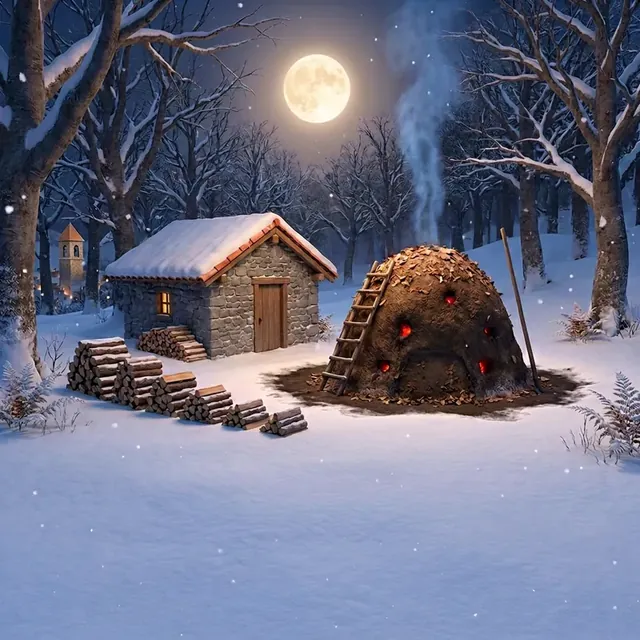
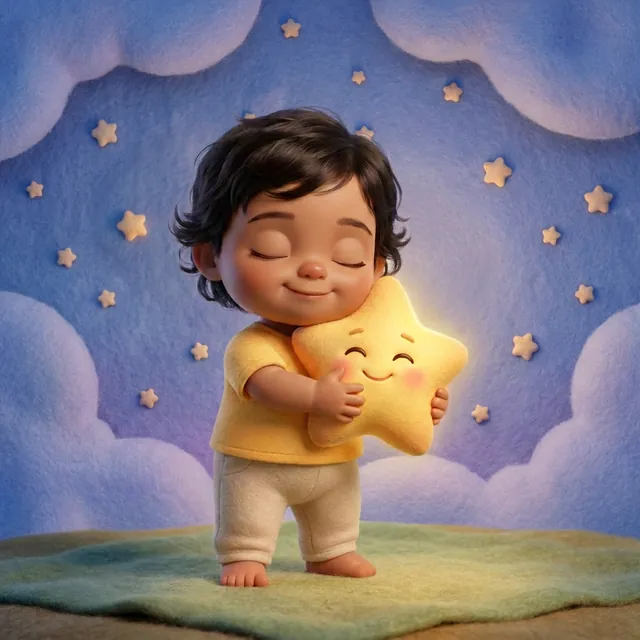
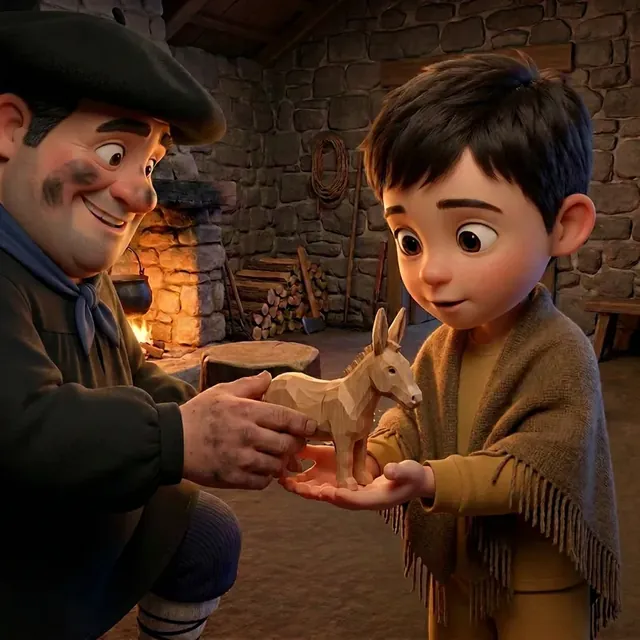
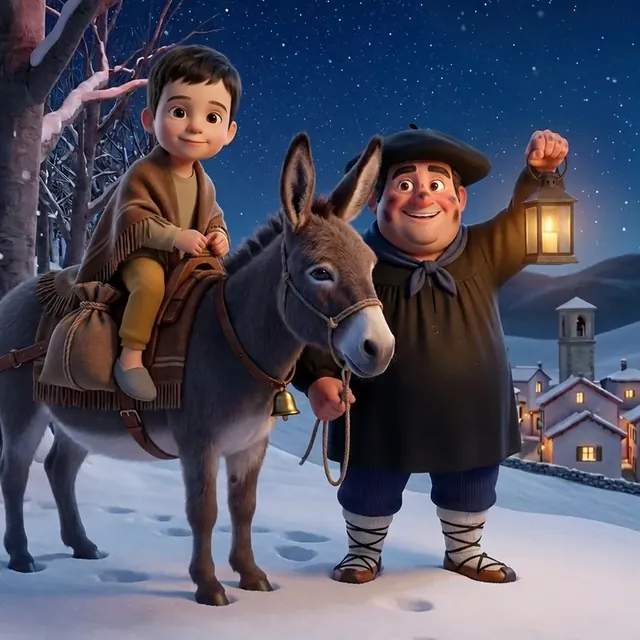
At IrayaBooks we have Olentzero's Lantern, with their face and their name: from their bed they see the lantern coming down the mountain, ride a donkey up to the charcoal mound and come back with a little wooden donkey that Olentzero has carved for them. It's for children aged 2 to 8. It was written in Basque first (here we explain what one of our books sounds like in Basque) and it's also available in Spanish, Catalan, Galician and English. The book costs €39.99; delivery is €4.99 on top. To have it for the night of the 24th, order it before 9 December.
Our books
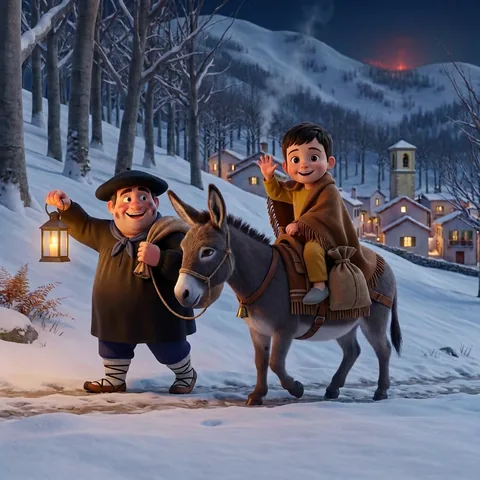 Olentzero's Lantern
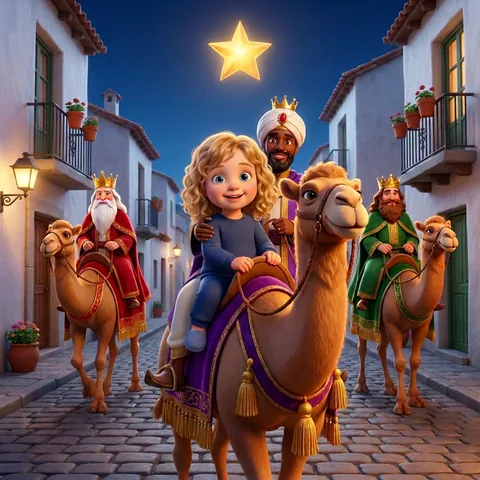 The Star of the Three Kings
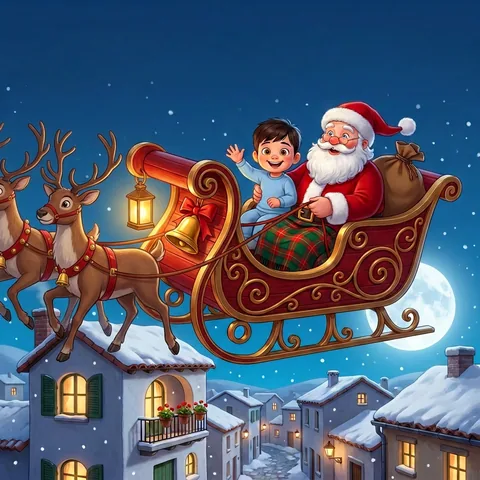 Santa's Magical Night
Frequently asked questions
Where is Olentzero celebrated?
In the Basque Country and in Navarre, including places where Basque isn't spoken today. In Lesaka (Navarre), his coming down from the mountain has been celebrated for generations.
What day does Olentzero come?
Almost everywhere, on the night of 24 to 25 December. In some towns he comes out on a different day, for example the 31st.
What does “Olentzero” mean?
Nobody quite agrees. Some read it as “the time for asking” (“oles egiteko aroa”: when people went from house to house singing); others as “the time of good things” (“onen aroa”).